Desktop AI coding assistant
Ask multiple coding models. Get one answer.
We don't trust one AI. Neither should you.
One model, guided work, or independent reviews. You choose.
A Full Jury example
Five reviews. One fix that holds.
“Fix checkout charging twice after a network timeout.”
In this sample, three reviews allow a fresh retry. Two warn that the first charge may already have succeeded. The regression test confirms their objection, and the judge keeps it.
One order. Lost response. Same retry.
Before2 charges
After1 charge
13 / 13 checks pass
Selected step: Judge
Task
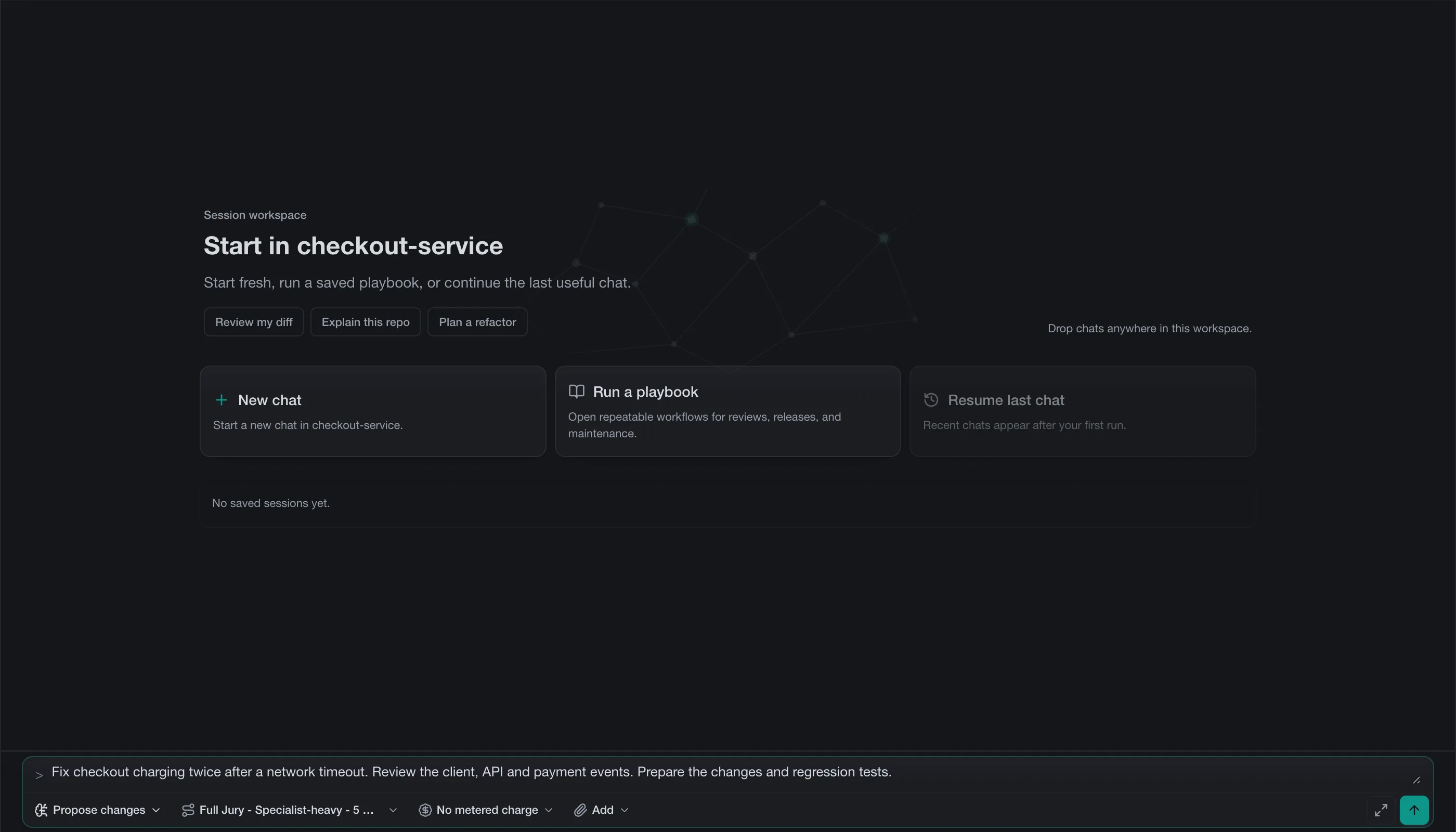
Jury
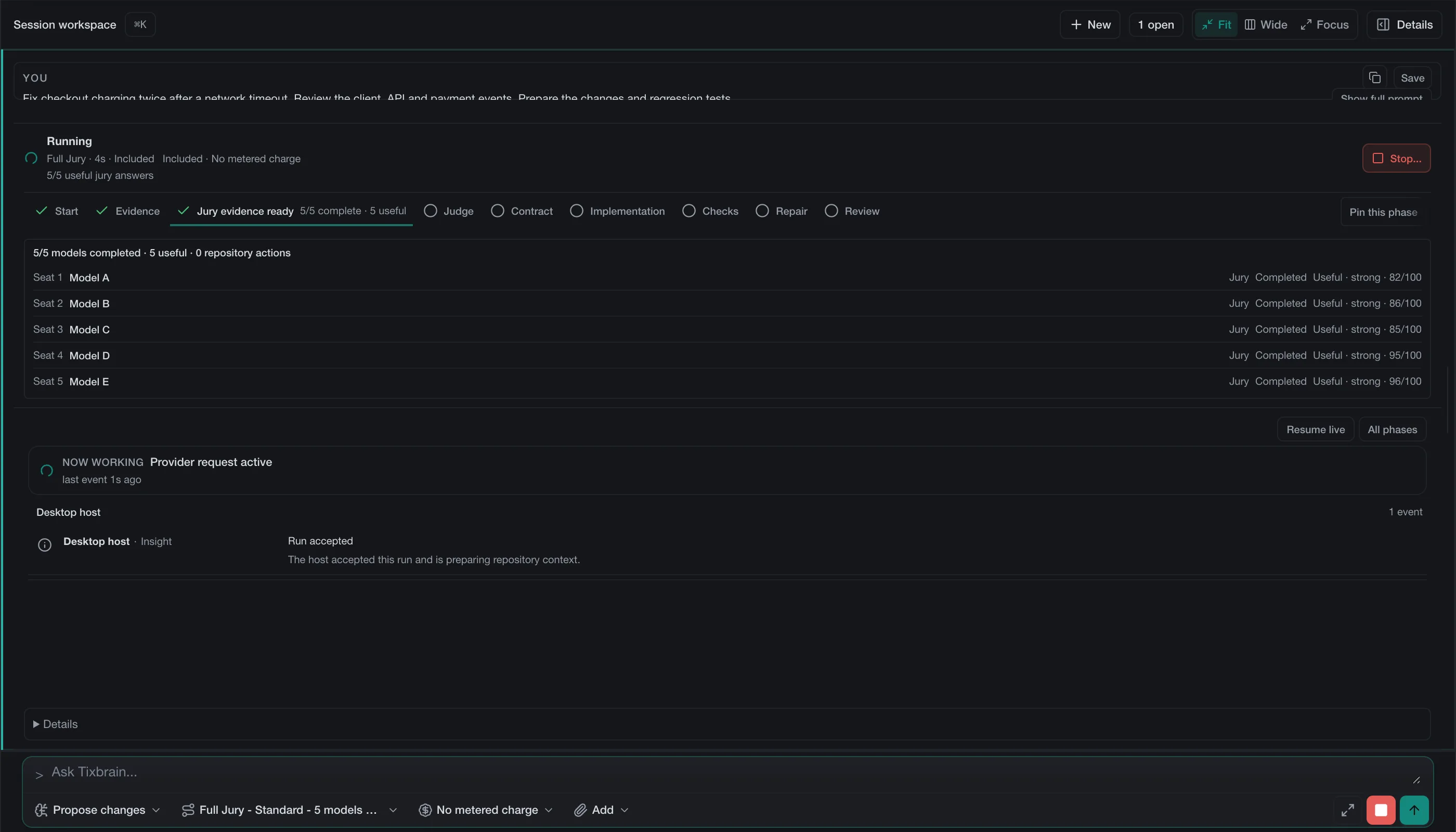
Judge
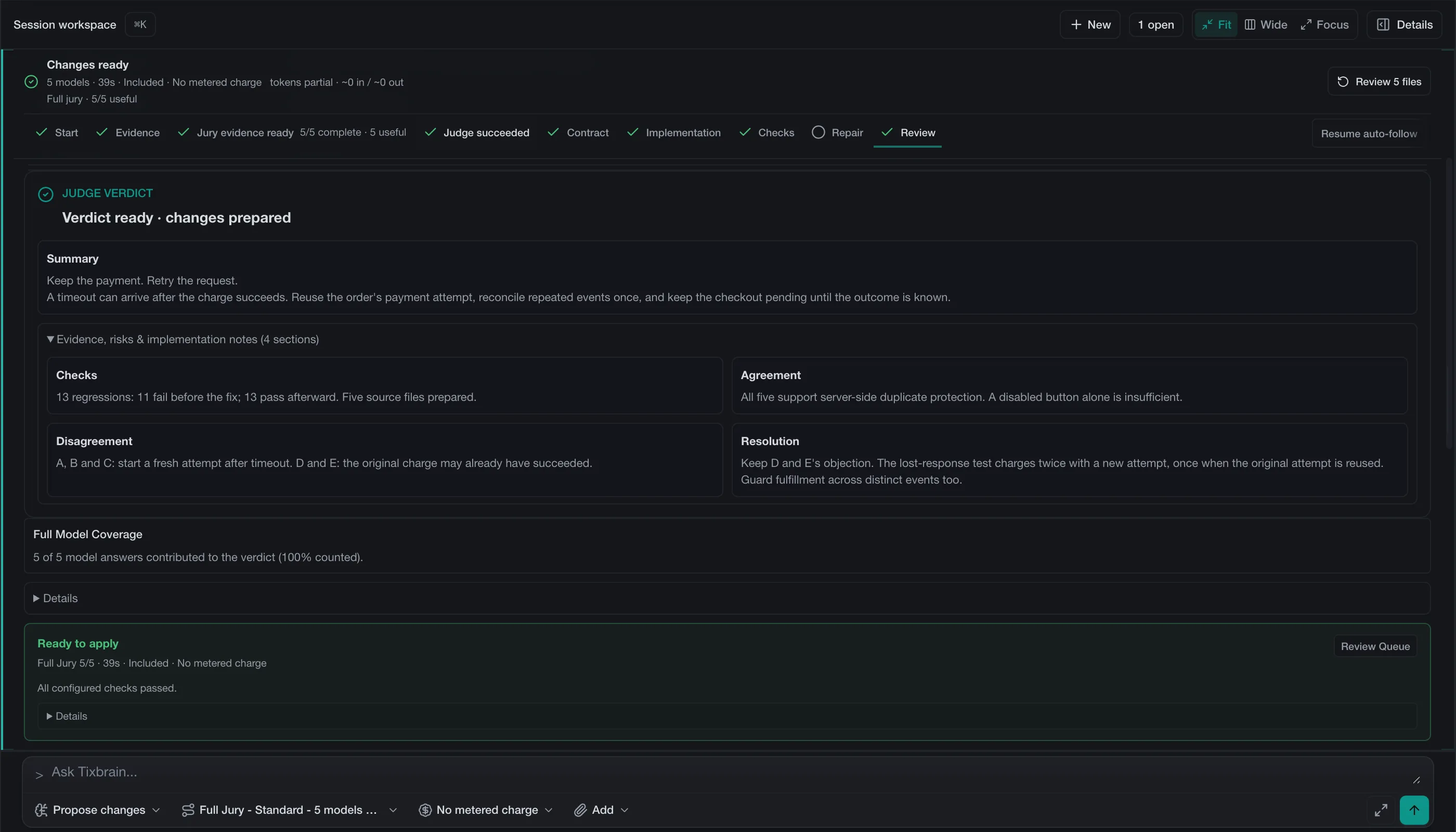
Review-only runs end here. When code changes are requested, the run continues.
Implementation
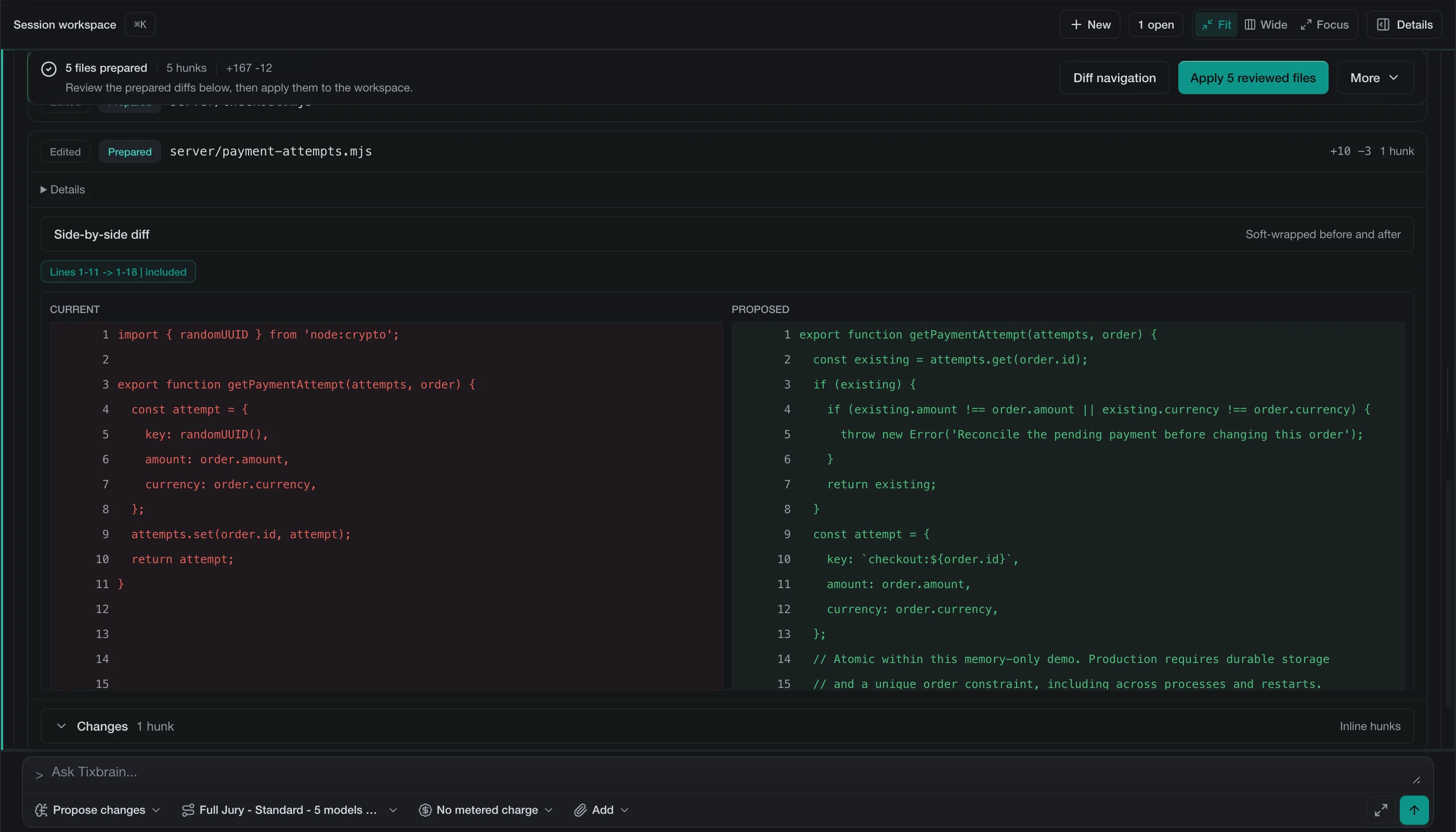
Checks
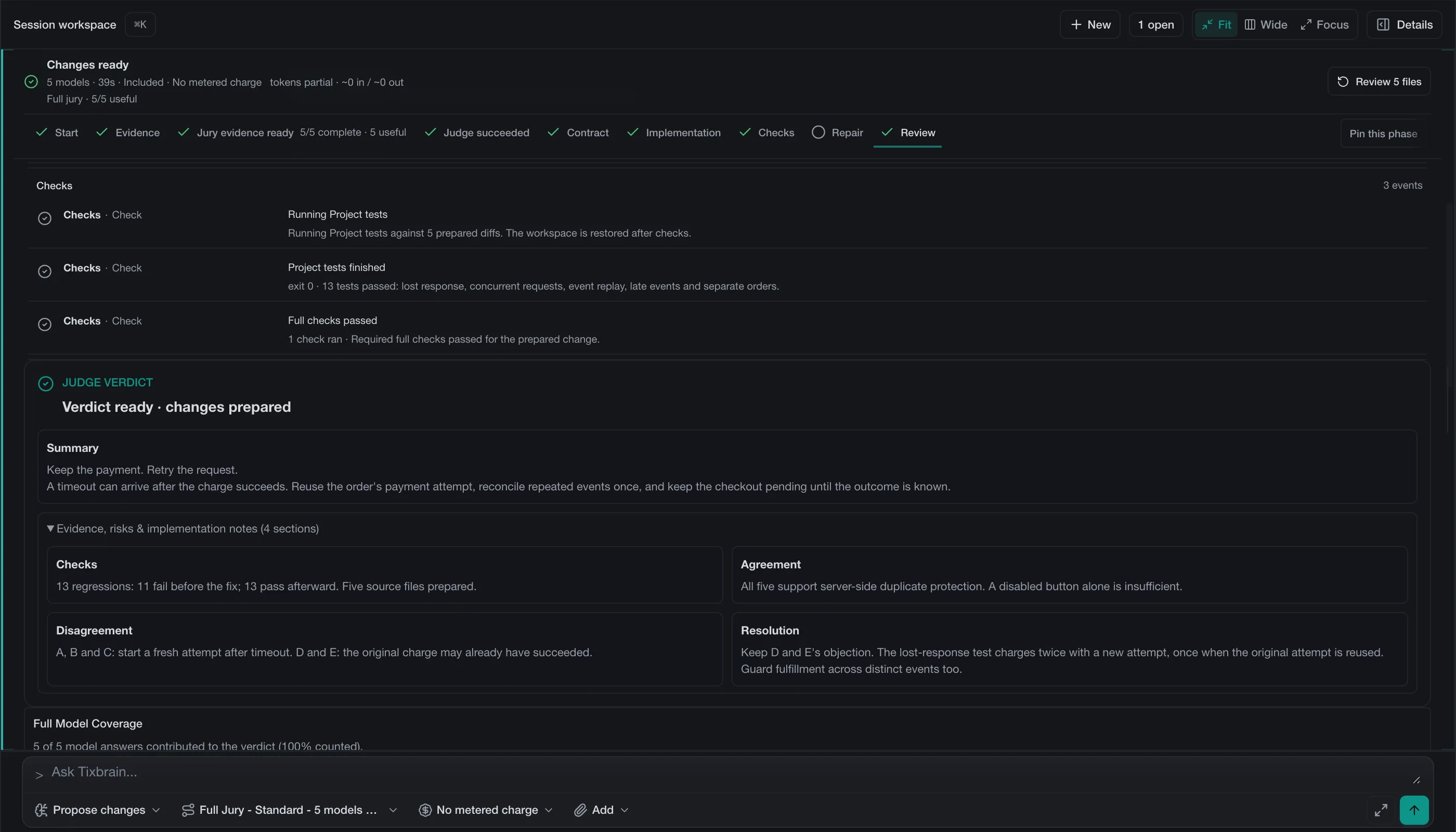
Review
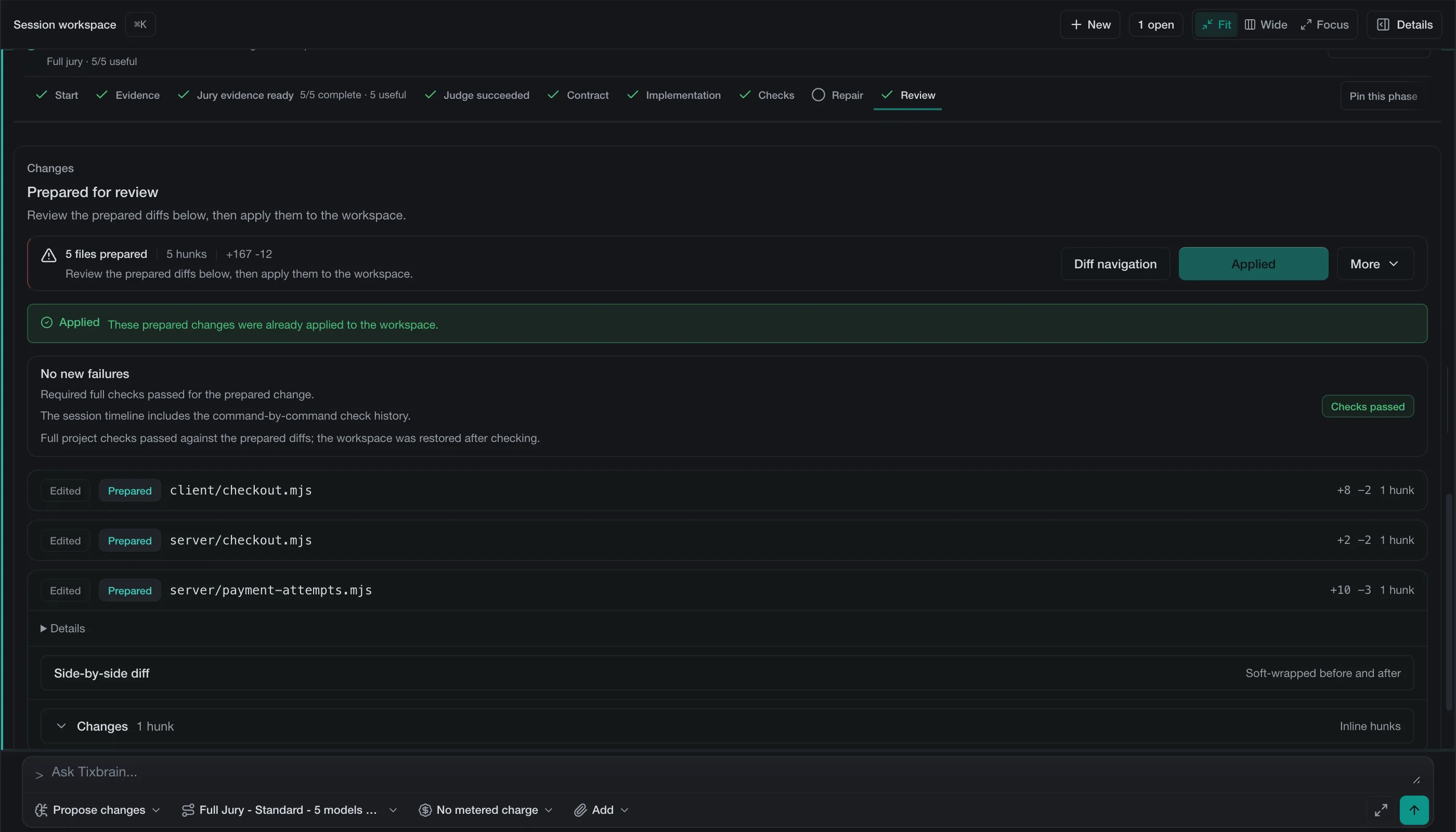
Nothing changes in your code until you say so. Approve, and it applies. Optional Auto apply keeps an undo checkpoint and still asks before shell, network or credit spend.
- Run cost
- Not billedSample data. Live costs include models and judge.
Illustrative jury responses. Real app captures. Locally verified regressions. Inspect the example source
Ways to work
The right depth for your task.
Set the coverage yourself, or let Auto choose for your task.
Auto
Single Model
Guided Solo
Adaptive Solo
Full Jury
Security
What the models cannot read.
Tixbrain's repository tools exclude env files, private keys, SSH folders, secrets directories and Git internals by default. The tool layer enforces these path restrictions before returning file contents.
.env**.pem.ssh/credentials.json.aws/secrets/
- Excluded before the run
- Secret paths are off-limits by default. Add your own patterns, or narrow a run to only the paths it needs.
- Approval by default
- Proposed changes arrive as diffs against real files and wait for approval by default. Optional Auto apply keeps an undo checkpoint and still asks before shell, network or credit spend.
- Security Lab
- In Deep review, the configured jury examines source-to-sink evidence, missing guards and proof levels. Findings retain their reasoning and unresolved gaps.
Pricing
Two plans. Model usage is separate.
Both are the Tixbrain subscription. With your own keys, your provider bills model usage. Prepaid credits for supported providers, where available.
- Starter
- $9.99per month
- Pro
- $19.99per month
Bring the models you already pay for.
Use your own keys with Anthropic, OpenAI, Google, xAI, Groq, DeepSeek or Mistral, where supported.
Supported providers and CLIs+
Run through Claude Code, Codex CLI, Gemini CLI or Copilot CLI where they work. Point at a private endpoint, including models on your own machine.
Q&A
Common questions.
Does every run use several models?+
No. Single Model gives a direct answer. Guided Solo plans, builds and checks; Adaptive Solo adds help only when needed; Full Jury starts with independent reviews.
What happens when I ask for code changes?+
Proposed changes enter the Review Queue as diffs with their checks and wait for your approval by default. Optional Auto apply keeps an undo checkpoint and still asks before shell, network or credit spend.
How does model access work?+
Use your own keys with Anthropic, OpenAI, Google, xAI, Groq, DeepSeek or Mistral; run through Claude Code, Codex CLI, Gemini CLI or Copilot CLI where they work; point at your own private endpoint, including models on your own machine; or use prepaid credits for supported providers, where available.
How does cost work?+
Tixbrain shows an estimate before it runs and an itemized receipt after. Every cost shows where it came from: billed by the provider, estimated, included, self-hosted, or unavailable.
How is this different from asking three chatbots the same question?+
Chat windows hand you three answers and leave the judging to you. Tixbrain reads your code, has the models investigate on their own without seeing each other's work, and returns one answer with the disagreement and the evidence attached. It also prepares changes you can accept or reject, and tells you what the run cost.
Isn't this the same as Claude Code's multi-agent review?+
Claude Code's agents are Claude models. Tixbrain runs models from different vendors against each other and has a separate judge resolve what they find. You can still use Claude Code as one of the models.
Can I keep using my own editor?+
Yes. Keep using your editor alongside Tixbrain. Desktop also has an optional local API for clients that support OpenAI-compatible text chat and a custom base URL. Enable it and configure your jury to route compatible requests through Tixbrain. Support depends on the client's API requirements.
Does Tixbrain remember anything between runs?+
Notes you approve come back on later runs, and each result shows when one was used.
What can the models read?+
You decide before a run starts, not as a check afterwards. Secret files are off-limits by default, and you can add your own patterns or narrow a run to the paths it needs.
.env* *.pem .ssh/ credentials.json .aws/ secrets/Not covered here? Email us: [email protected]
Early access
Bring your next coding question.
Tell us where you would use it first.